“What gym flooring do we get?”
I get this question more than any other. More than “what equipment,” more than “how big should it be,” more than “can you make it look like Equinox and Soho House had a baby.”
So here’s my whole answer. It fits on an index card.
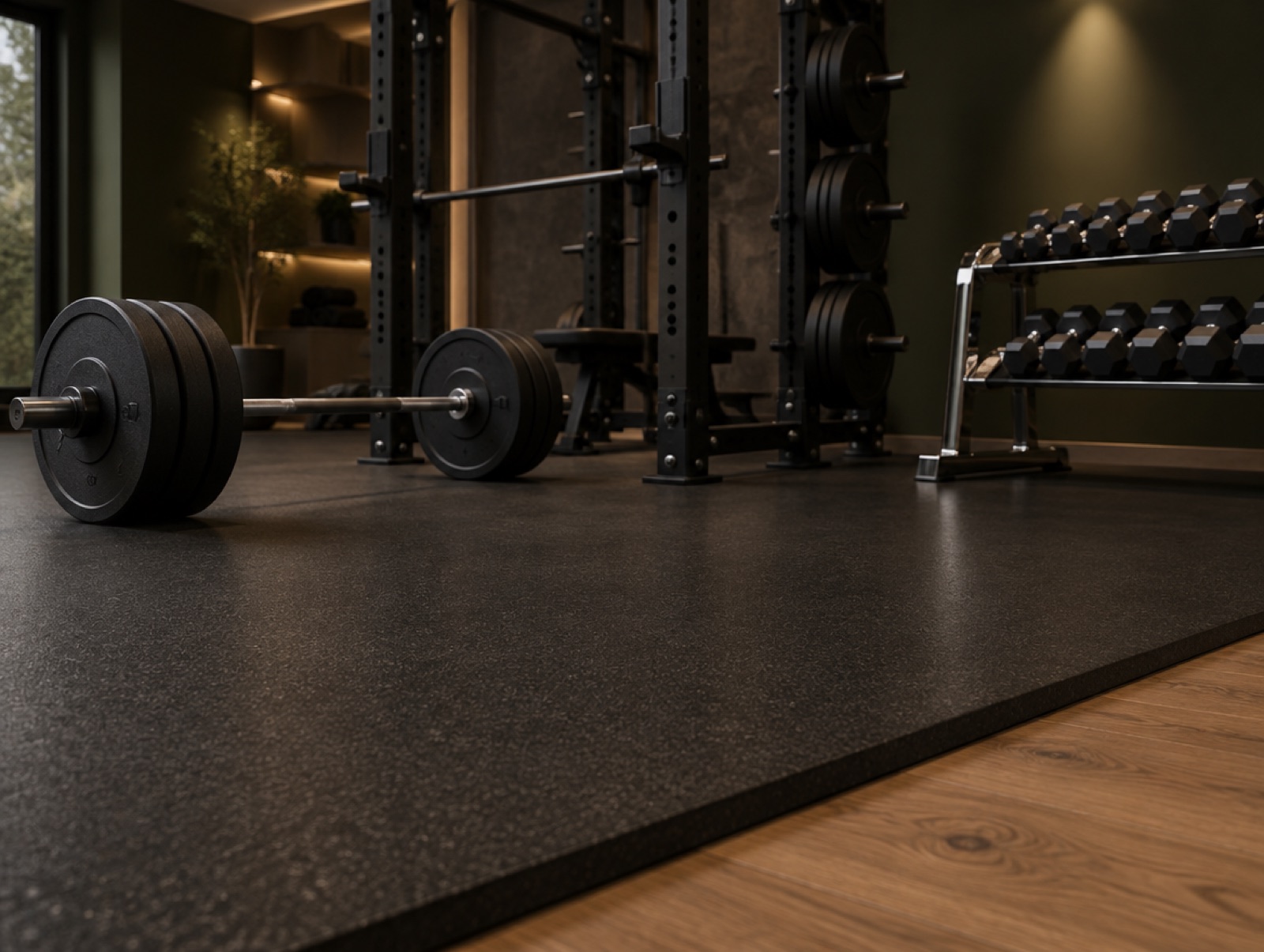
- Go thick. Half an inch is the floor, pun intended. That’s the minimum for anywhere a weight is going to hit the ground. One inch is where it actually starts creeping into performance centers and D1 facilities. Anything thinner and you bought a yoga mat and called it flooring.
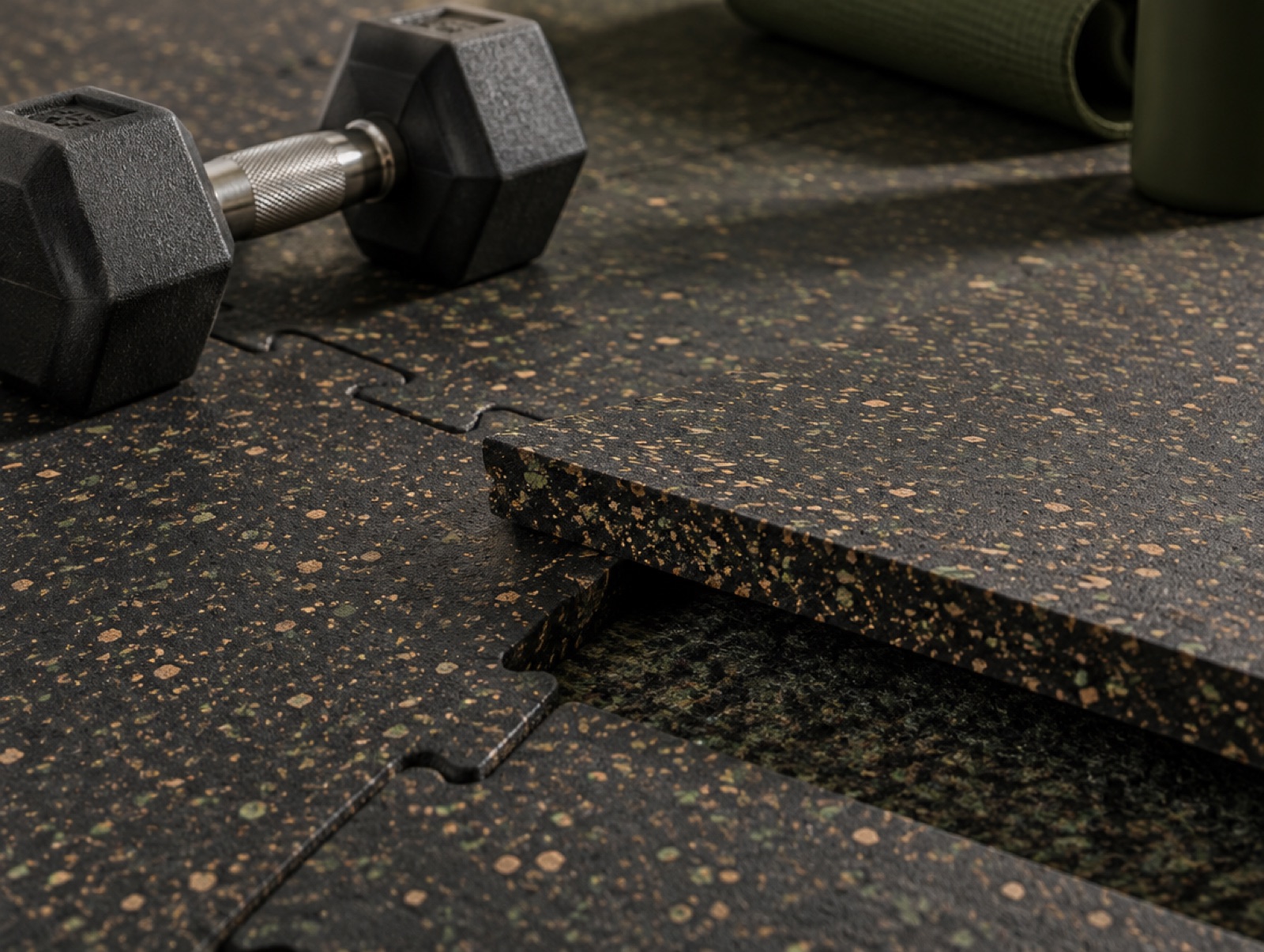
- Rolled or tiles. Doesn’t matter much. Rolled looks slick. No seams, one clean surface. Tiles you can pull up and swap when a guy drops a bar on the same square 400 times. Some people are just tile people. Pick based on how you’ll maintain it, not how it photographs on opening day.
- Color is where everyone wastes the meeting. Everybody wants earth tone right now. Brown, beige, greige. Then somebody googles “natural gym flooring,” finds cork, and thinks they cracked it. I’ve never seen cork hold up. Cork-rubber blend, maybe, and go dark, because it marks up fast.
- Acoustics is where you get sued. What’s under the rubber matters more than the rubber. If there’s a hotel room or an apartment below you, get a system that comes with an acoustic report. Not a fancy brochure. A report. The best vendors have these (and shelled out serious money for the tests).
- The install is where you actually lose money. Great plan, great product, and then a GC hands the job to a sub doing gym flooring for the first time. You just spent $60,000 to be somebody’s practice round. Ask who’s installing before you ask what they’re installing.
That’s it. That’s the framework.
People spend an hour on number three. Numbers four and five are the ones that cost real money.