
Flooring is the hardest-working surface in a luxury gym and the one guests notice least, until it goes wrong. It decides how the room sounds, how it wears, how it smells and whether the people below ever hear a dropped dumbbell. This is how we spec it.
Insights
Luxury gym flooring: how we spec it
Rubber, vinyl or turf, how thick, and how to keep the noise out of the rest of the building. The floor of a luxury gym, the way SPX specs it.
Get the full guide
You also get The Punch List, our weekly email. Unsubscribe anytime.
Why flooring is a value decision

In a high-end development, the gym floor is part of the amenity package buyers and residents judge the building by.
Market differentiation
A modern fitness center sets a property apart and speeds lease-ups.
The literal foundation
Durable flooring reduces maintenance and noise issues.
Resident retention
Quality amenities boost long-term resident satisfaction.
Aesthetic impact
Thoughtful design raises the perceived value of the whole property.
Zone the floor by activity
One material rarely suits a whole gym. We zone the floor by what happens on it, so each area gets the surface its training needs.
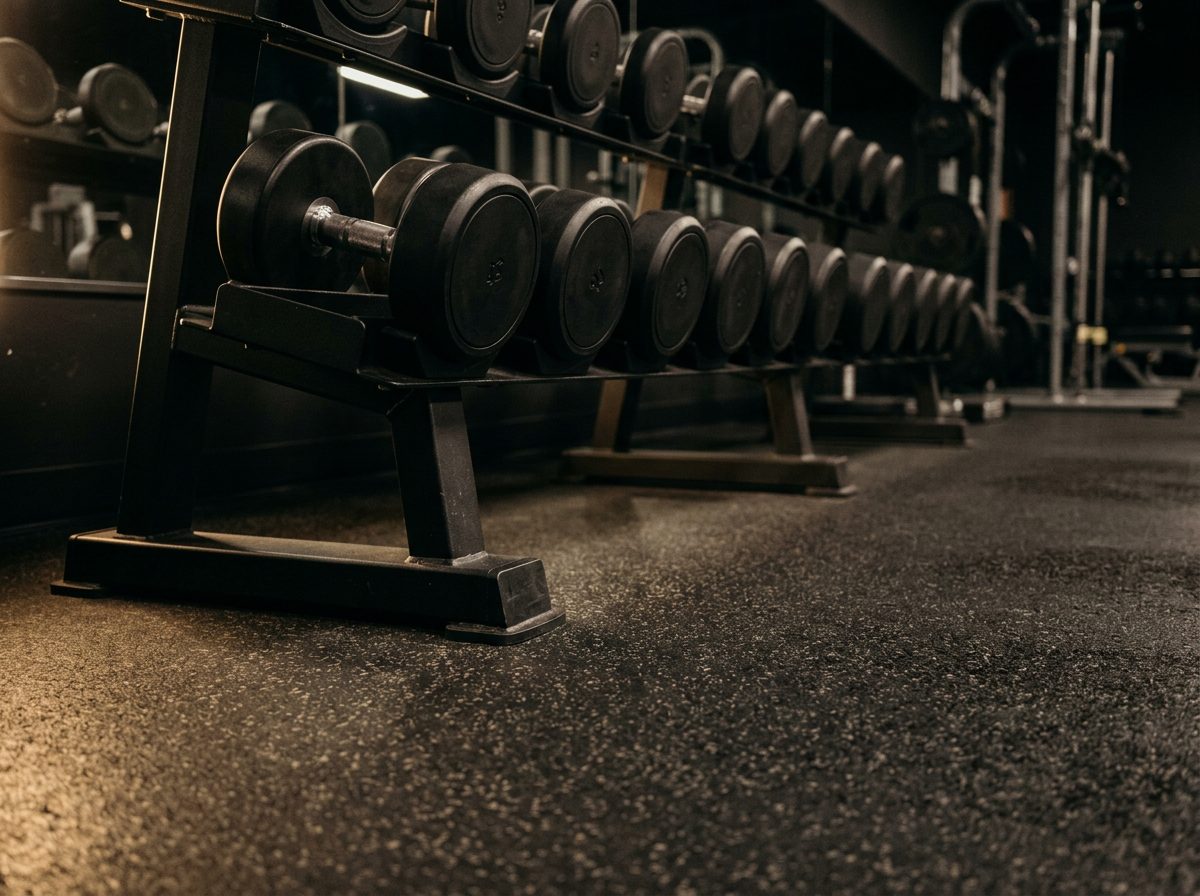
Rubber
Durable, shock-absorbing surfacing for heavy-impact zones.
Best for: free weights and cardio.
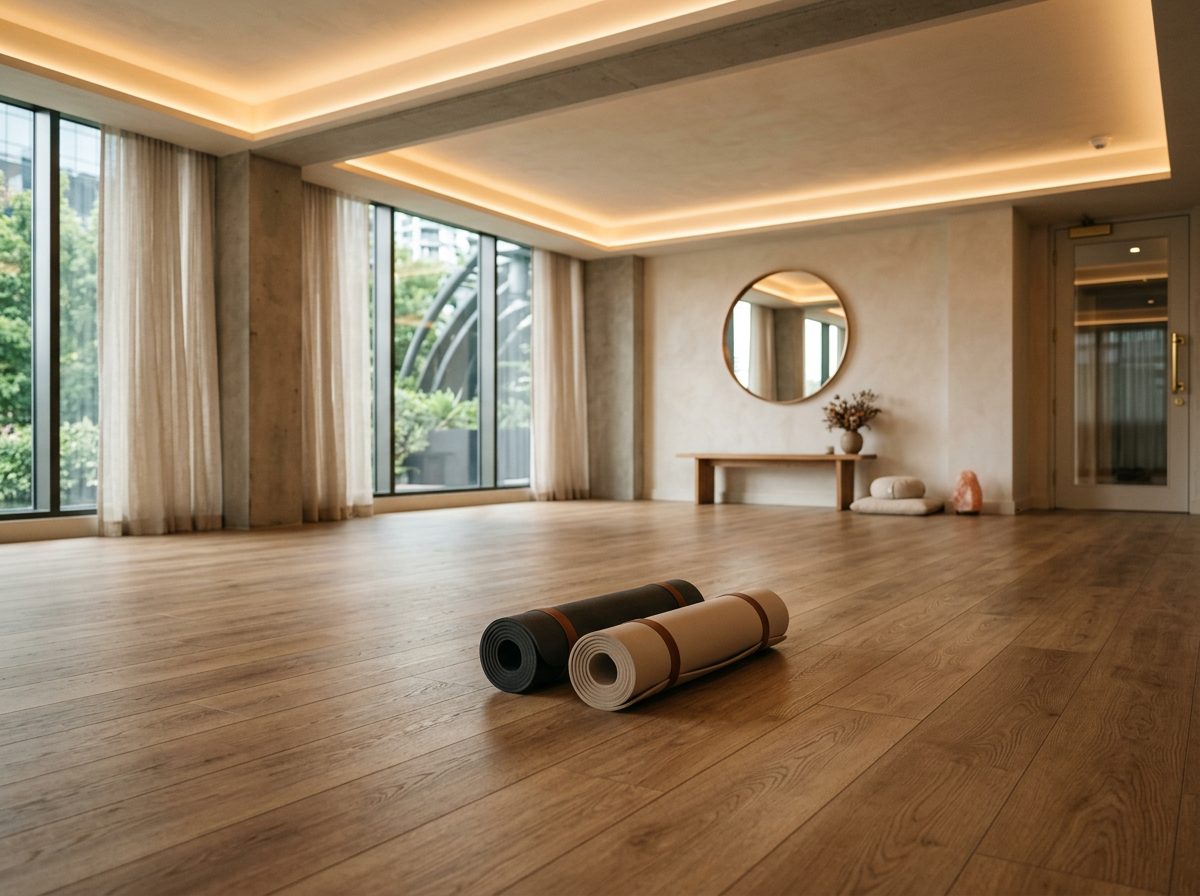
Vinyl (PVT)
Quiet, resilient tile with wood or stone visuals.
Best for: boutique studios and yoga.
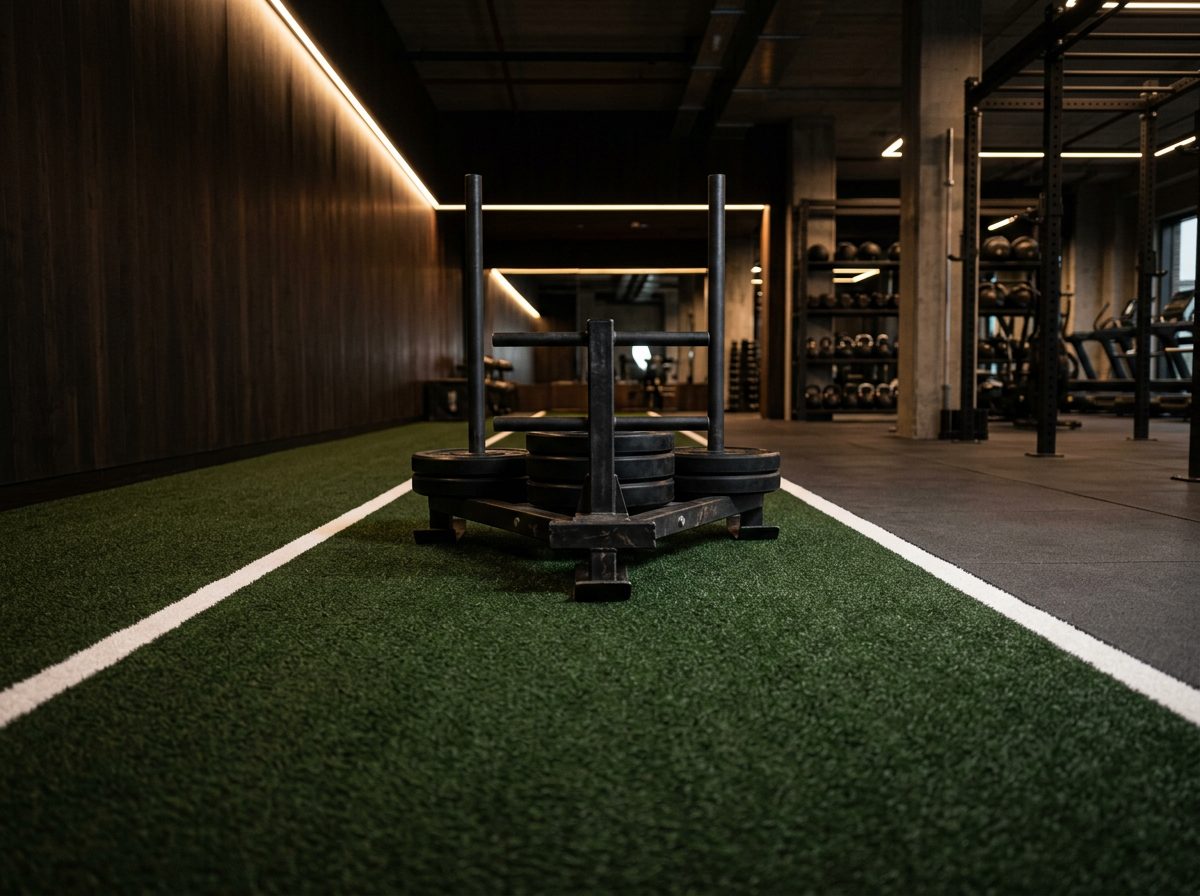
Turf
High-density turf for sleds and drills.
Best for: open space and functional training.
Not all rubber is equal
Rubber is the workhorse of most gyms, and the grade you choose shows up in how the room smells, cleans and looks.
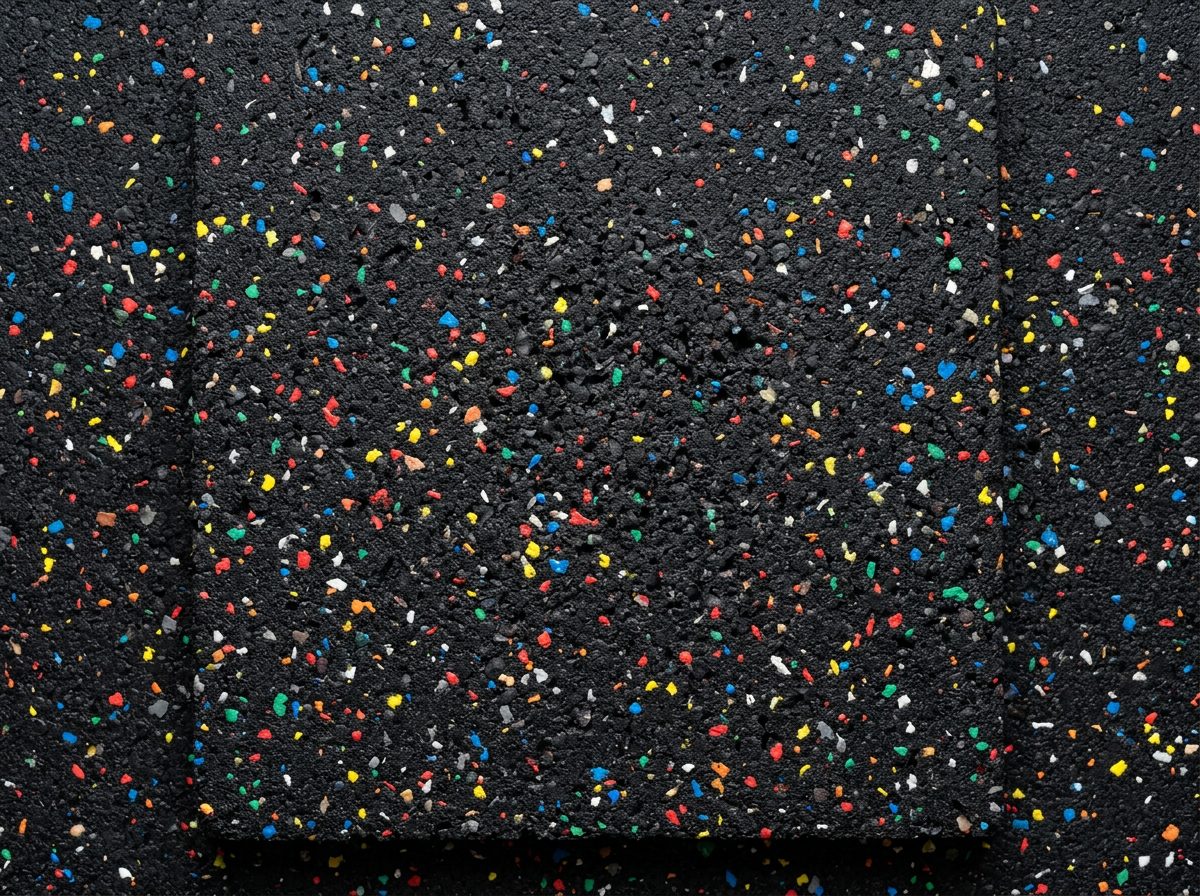
Recycled rubber
Cost-effective and durable. Excellent for general use, but it can carry a distinct odor.
Standard performance.

Virgin rubber
Denser, non-porous and vulcanized. Superior for hygiene and odor control.
Premium performance.
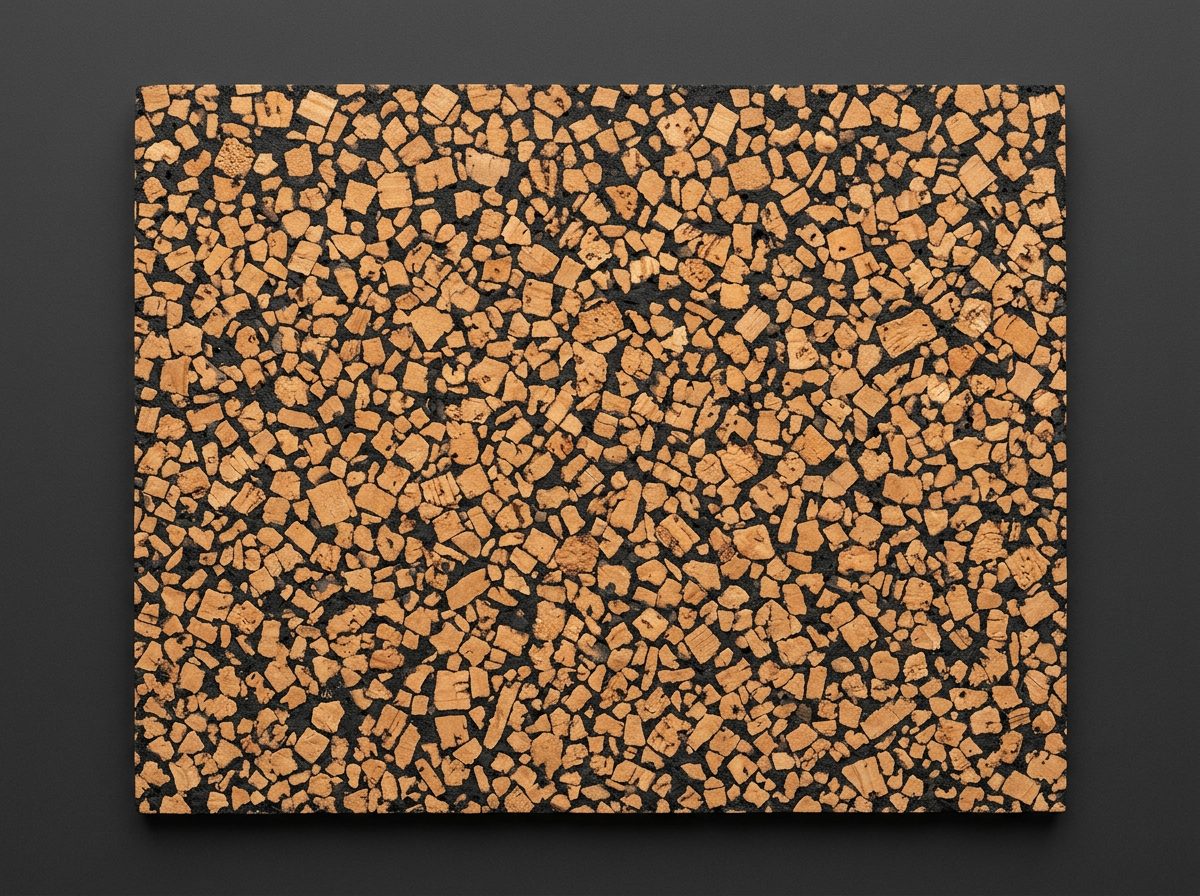
Cork-rubber
A unique, high-end look. Less durable, so best for yoga or light activity zones.
Aesthetic focus.
Commercial flooring should start at 12mm.
Thinner rubber can't take repeated impact from dropped weights. It wears faster, protects the subfloor less and lets more of the noise through to the rest of the building.
Rolled or tiles
Once the material is chosen, the format decides how finished the room looks. Visual continuity shapes how the whole facility is judged.
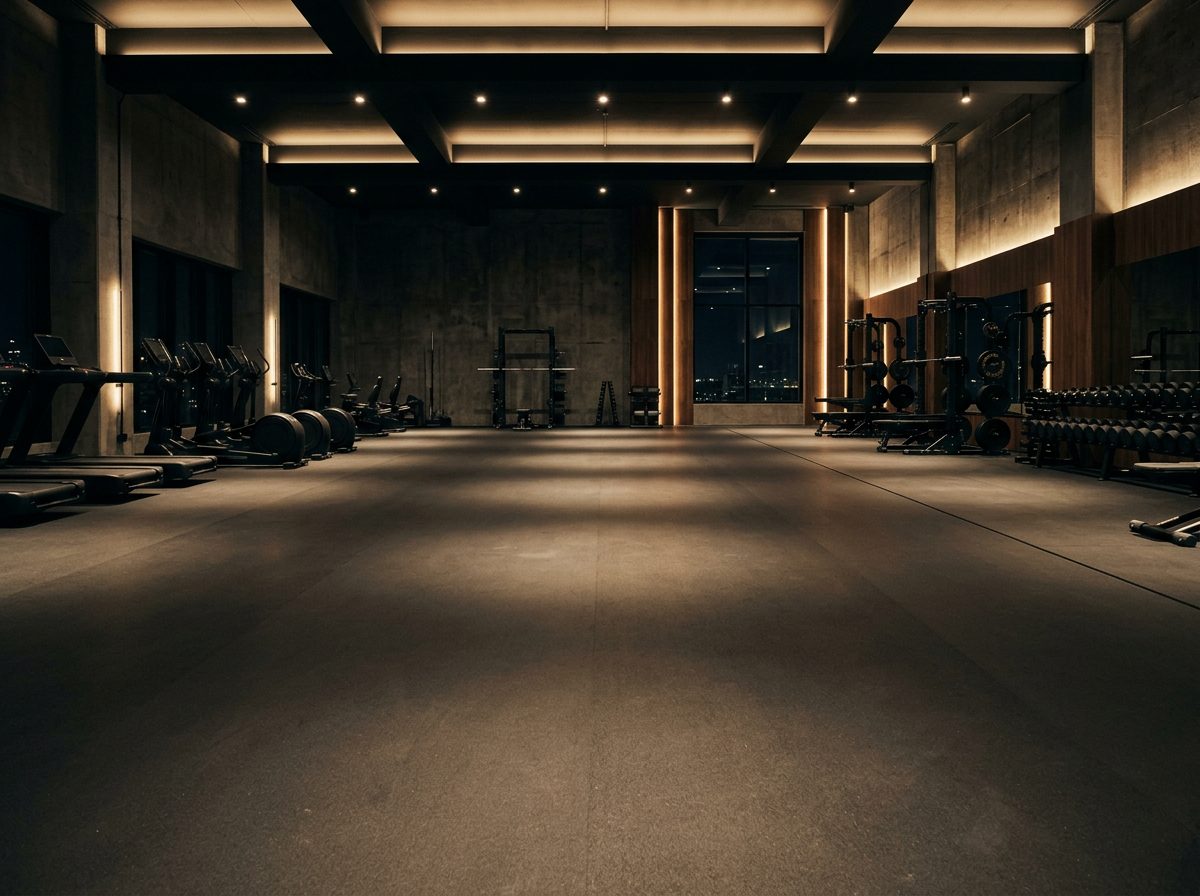
Rolled rubber
A seamless, unified look for large, high-end fitness floors. Minimal seams keep it clean and premium.
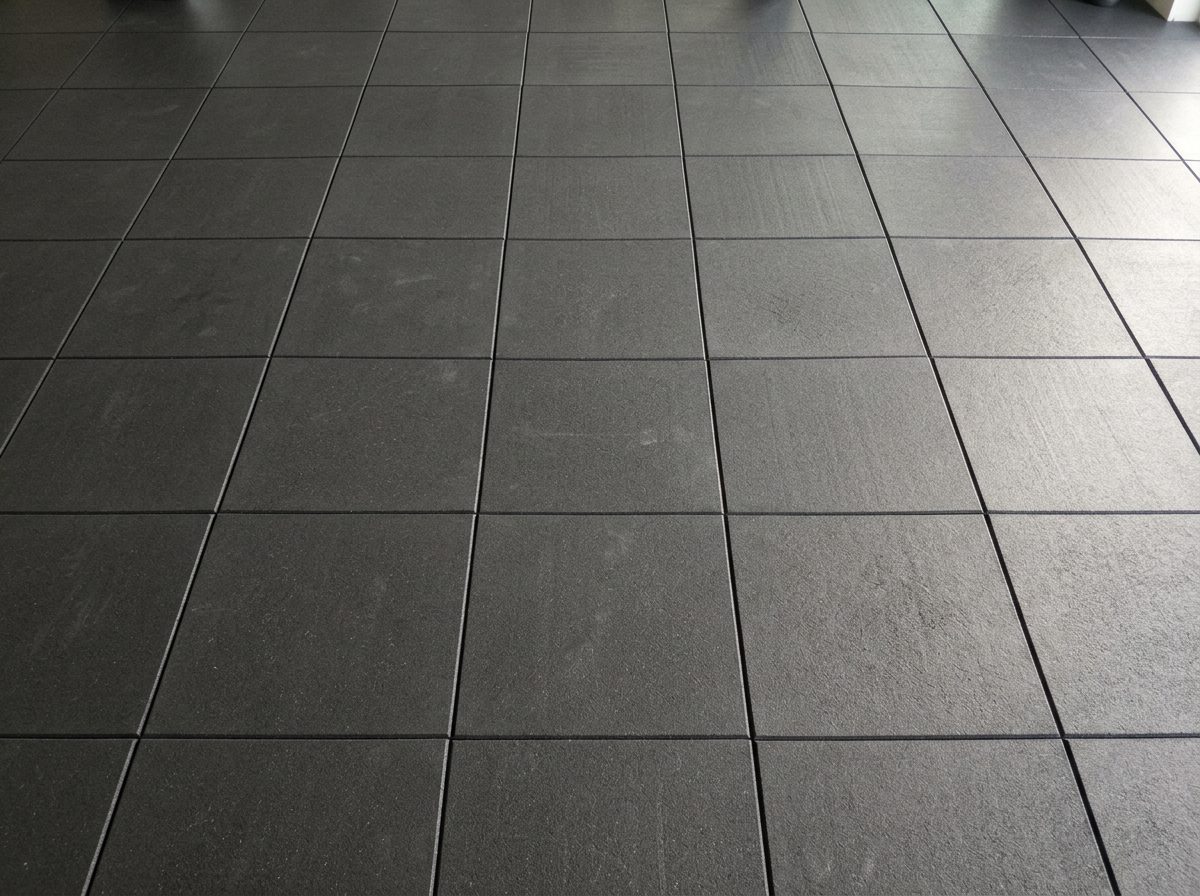
Precision tiles
Modular flexibility. Precision-cut tiles create a clean, structured look.
Know the acoustic numbers
In a multi-story luxury development, acoustic engineering is a technical necessity. Three numbers tell you how a floor will perform.
STC
Sound Transmission Class. Blocks airborne noise: music and voices.
IIC
Impact Insulation Class. Mitigates impact noise, like footsteps.
ΔIIC
Delta IIC. The improvement the flooring provides on its own.
Design the noise out
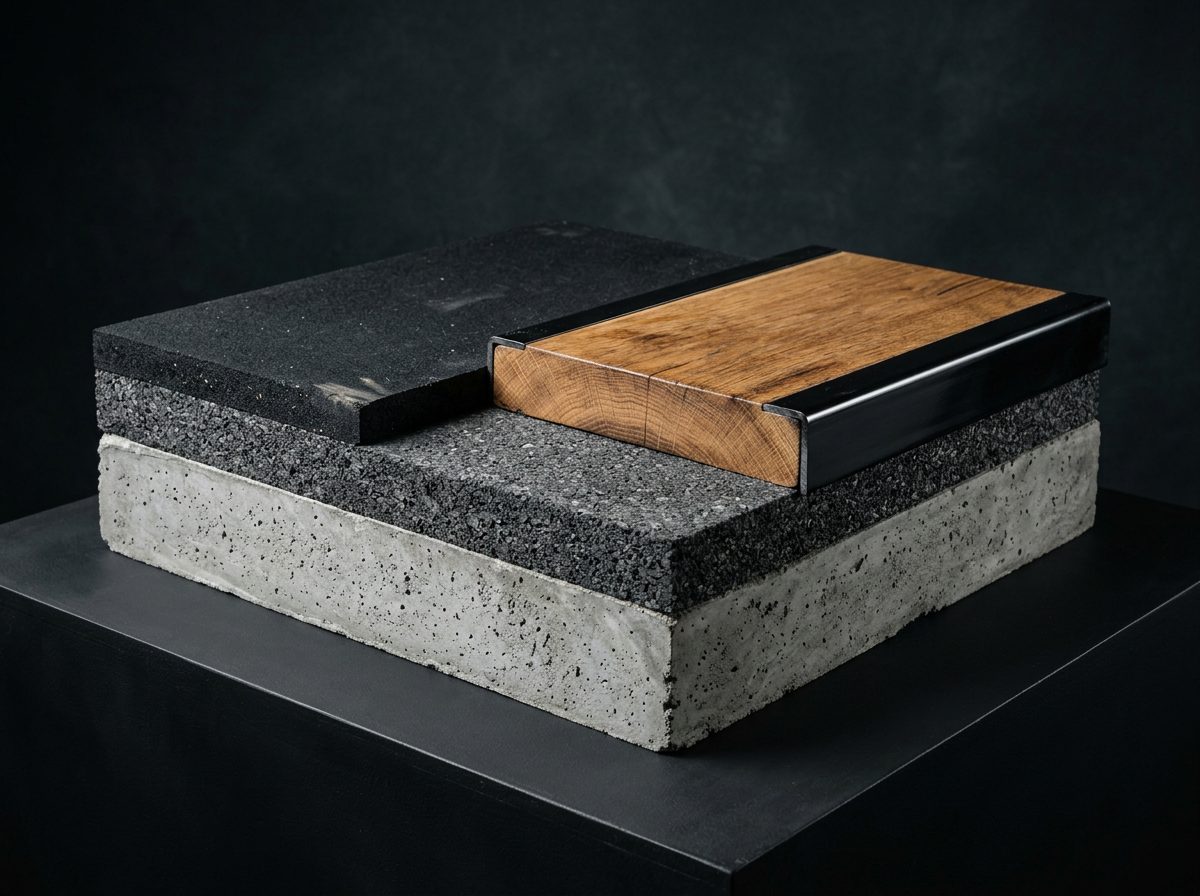
The numbers come from the floor build-up and the plan. Each layer has a job: the slab carries the load, the shock pad decouples the floor from the structure, and the surface takes the wear.
- Isolation pads under cardio equipment, to minimize low-frequency energy transfer.
- Decoupled systems with high-density shock pads in heavy lifting zones, to prevent structural vibration.
- A strategic layout that keeps high-impact zones away from shared walls and guest rooms.
Safety and compliance
Following the standards protects users and limits the developer's liability.
- Surfaces must be stable, firm and slip-resistant, so the space works for every user.
- Changes in floor level are limited to 1/4" without treatment, or 1/2" if beveled.
- Transitions between flooring types need proper detailing for safety and compliance.
- ASTM F2772-24 is the key standard for indoor sports floors: force reduction, surface effect and vertical deformation.
Get the subfloor right
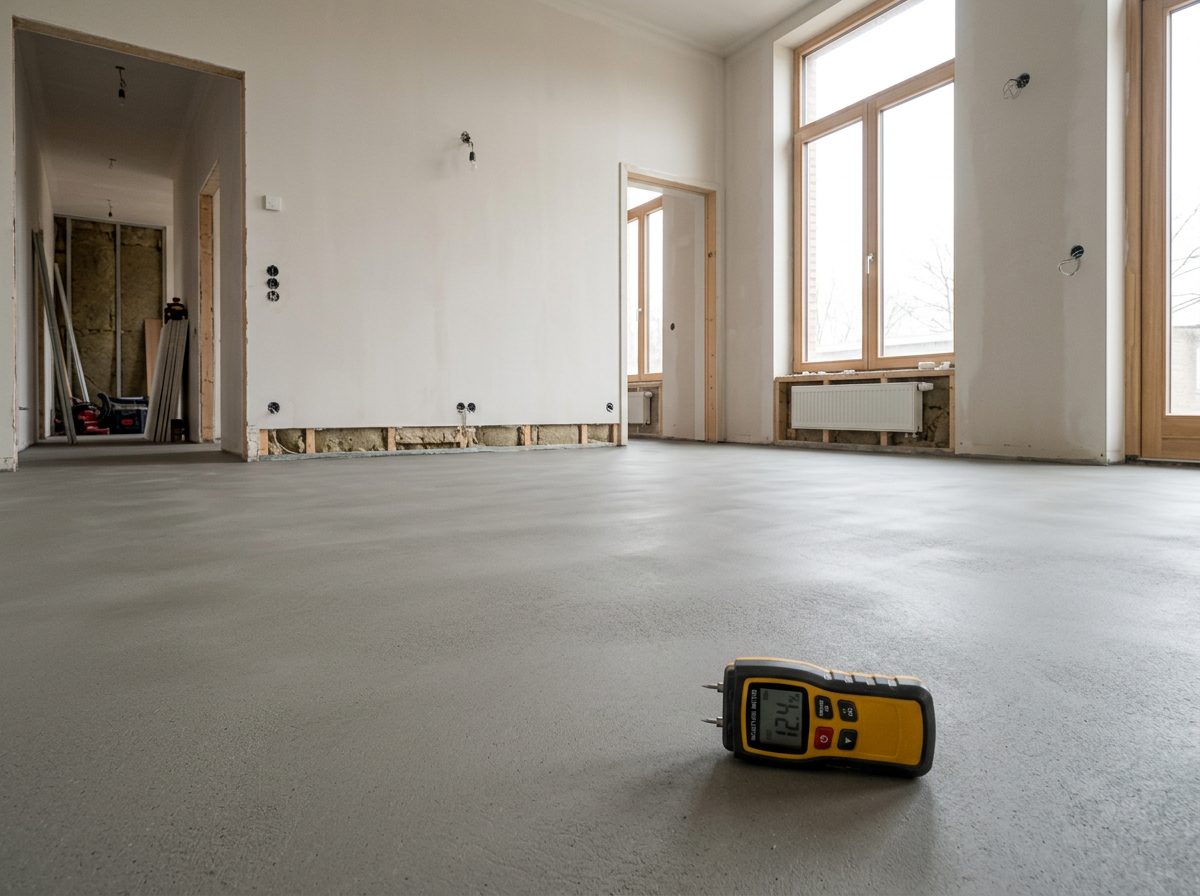
Before anything goes down, the subfloor needs four checks. Delamination, bubbling and adhesive failure all start here.
- Moisture testing. Excess moisture is the leading cause of adhesive failure and mold growth.
- Leveling and patching. Any imperfection will telegraph through the finished floor, and luxury finishes need a perfectly flat surface.
- Structural integrity. The subfloor has to take the dynamic loads and repeated impact of heavy commercial equipment.
- Priming and adhesion. Proper priming creates a permanent bond and prevents delamination and bubbling.
Before you spec, answer these
- What's above and below? Residential units or hotel rooms need superior acoustic isolation.
- What's next door? Shared walls with quiet zones need lateral sound mitigation.
- How hard will it be used? High-intensity zones need thicker, decoupled systems.
- Does it carry the brand? Custom colors, logos and zone markers need precision design and cutting, matched to the property's palette.
- What's the air quality target? Low-VOC products protect indoor air in high-end residential spaces.
What the full guide adds
- MaterialsRubber, vinyl and turf, and why not all rubber is equal.
- AcousticsSTC and IIC explained, plus the isolation systems that prevent noise complaints.
- Safety and subfloorLevel-change limits and the subfloor prep that makes a floor last.
- Top-tier vendorsWho SPX specs, and what each one does best.
Get the full Flooring Guide
Flooring Guide
The foundation of
luxury fitness.
Flooring is the hardest-working surface in the building. Materials, acoustics, compliance, subfloor and vendors, the way we spec them. Enter your email and the guide opens right away.
Your email
You also get The Punch List, our weekly email. Unsubscribe anytime.
What’s inside
- MaterialsRubber, vinyl and turf, and why not all rubber is equal.
- AcousticsSTC and IIC explained, plus the isolation systems that prevent noise complaints.
- Safety and subfloorLevel-change limits and the subfloor prep that makes a floor last.
- Top-tier vendorsWho SPX specs, and what each one does best.
Get The Punch List
One email a week on luxury gym design, the market, equipment and operations.